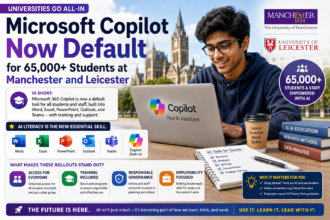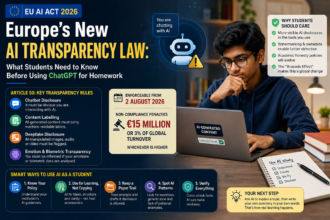
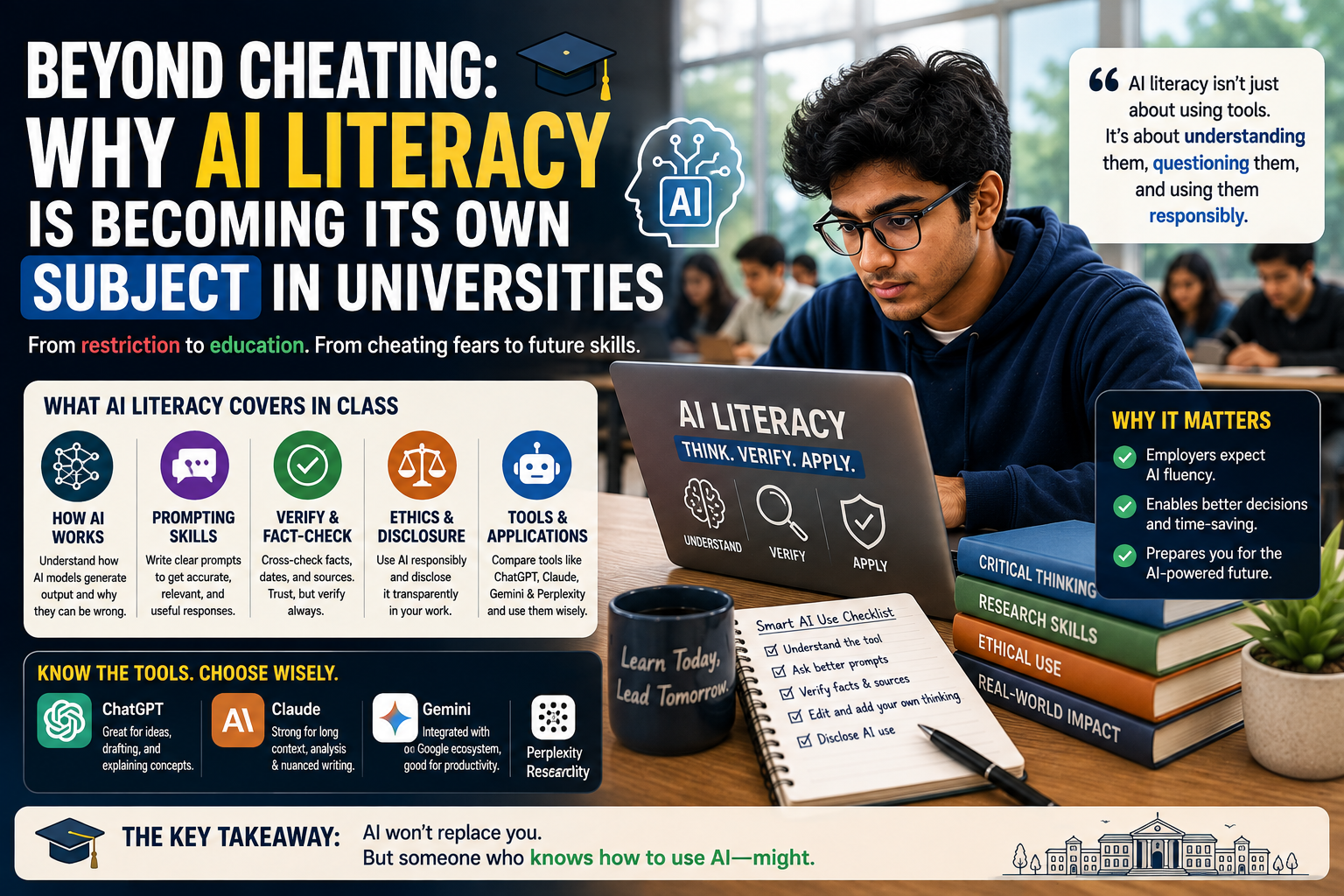
For the last couple of years, every conversation about AI in Indian colleges started and ended with one word: cheating. Will students use ChatGPT to write assignments? Can professors catch AI-generated essays? Should AI be banned in exam halls? But if you’ve been following higher education closely, like I have, you’ll notice the conversation has shifted. Universities from IIT Madras to smaller private colleges in Tier-2 cities are no longer just policing AI use they’re teaching it as a subject. AI literacy is becoming a core skill, sitting right next to communication and computer basics in the curriculum.
In short: AI literacy in universities means structured teaching around how AI models work, how to use them responsibly, how to verify their output, and how to apply them ethically in academic and professional work not just rules about what’s “allowed” during exams. It’s a shift from restriction to education, and it’s happening because employers, accreditation bodies, and students themselves are demanding it.
Let me walk you through why this shift is happening, what it actually looks like in classrooms, and how you can build this skill yourself even if your college hasn’t caught up yet.
Why “Just Ban It” Never Worked
I remember testing this myself last year. I fed a mid-tier detection tool a piece of text I’d written by hand, heavily edited after using Claude for a first draft. It flagged as “likely AI-generated.” Then I ran a fully human-written paragraph from an old essay of mine it also got flagged, just with a lower score. That inconsistency isn’t rare; it’s the norm with AI detectors today.
Universities figured this out the hard way. A few well-publicized cases of students being wrongly accused of AI plagiarism, sometimes based on detector scores alone, made institutions realize that policing output isn’t sustainable. You can’t reliably detect what a tool produced, and even if you could, banning a technology that’s already embedded in job requirements does students a disservice.
So the logic flipped. Instead of asking “how do we stop students from using AI,” the better question became “how do we make sure students understand what they’re using.”
The Real Problem Wasn’t Cheating It Was Blind Trust
The bigger risk universities noticed wasn’t students using ChatGPT to skip an assignment. It was students trusting AI output without questioning it citing a fabricated case law that Claude or ChatGPT confidently made up, or submitting a statistic that sounded right but had no real source. This is often called “hallucination” in AI circles, and it’s a well-documented limitation across every major large language model, not a bug specific to one tool.
That’s a research skills problem, not a discipline problem. And research skills are exactly what universities are built to teach.
What AI Literacy Actually Covers in Class
Having sat in on a few guest sessions and read syllabi shared by faculty on LinkedIn, here’s what a typical AI literacy module tends to include:
1. How Large Language Models Actually Work
Not deep technical machine learning theory, but a working mental model: these tools predict likely next words based on patterns in training data, they don’t “know” facts the way a database does, and they can be confidently wrong. Understanding this single point changes how students use the tool.
2. Prompting as a Skill
Students learn that a vague prompt gets a vague answer. For example, “write about climate change” gives generic filler. But “act as an environmental economist and explain three policy trade-offs India faces in transitioning to renewable energy, citing the kind of data source I should verify each claim against” gives something usable provided the student still checks it.
3. Verification and Source-Checking
This is the part I think matters most. Good AI literacy programs teach students to treat AI output like a first draft from a smart but occasionally unreliable colleague useful, but not final. Cross-checking facts, dates, and citations against real sources becomes a required step, not an afterthought.
4. Ethical and Disclosure Norms
Some universities now require students to disclose AI use in a short note attached to assignments which tool, what it was used for (brainstorming, editing, drafting), and what was done manually. This mirrors how professional writing and research fields are handling AI disclosure.
5. Tool-Specific Familiarity
Students get hands-on exposure to multiple tools ChatGPT, Claude, Gemini, and sometimes specialized tools like Perplexity for research with citations. Each has different strengths: Claude tends to handle longer documents and nuanced writing well, ChatGPT has a huge plugin and custom GPT ecosystem, and Perplexity is built around sourcing. Learning the differences helps students pick the right tool instead of defaulting to whichever app is trending.
A Quick Walkthrough: How I’d Teach a First AI Literacy Session
If I were running a one-hour session for first-year students, here’s roughly how I’d structure it:
- Ask a factual question you know the answer to. Get the AI’s response, then check it against a real source. Show students where it got something subtly wrong.
- Compare two prompts on the same topic one vague, one detailed side by side, and discuss why the outputs differ.
- Run the same question through two different tools (say, ChatGPT and Claude) and compare tone, depth, and accuracy.
- Practice a disclosure statement writing two lines explaining how AI was used in a sample assignment.
- Discuss a real ethical scenario, like using AI to summarize a research paper versus using it to write the entire literature review unedited.
This kind of hands-on approach sticks far better than a one-page “AI policy” handout that nobody reads.
What This Means for Students in India
For Indian students specifically, this shift matters for a practical reason: employers already expect AI fluency. Marketing roles expect familiarity with AI copywriting tools. Software roles expect comfort with AI coding assistants like GitHub Copilot. Even government exam coaching has started incorporating AI-assisted study planning. A university that teaches AI literacy is giving students a head start that goes beyond the classroom.
That said, it’s worth being realistic. Not every college has rolled this out yet, curriculum updates in India can be slow, and the tools themselves change constantly pricing tiers, free usage limits, and features on platforms like ChatGPT, Claude, and Gemini get revised often enough that any specific detail can go outdated within months. If a university teaches AI literacy as fixed rules around one tool, that’s a weaker approach than teaching transferable principles: understanding limitations, verifying output, and using AI as a collaborator rather than a replacement for thinking.
Limitations Worth Keeping in Mind
AI literacy programs aren’t a silver bullet. A few honest caveats:
- Detection tools remain unreliable, so universities relying on them alongside literacy training are still working with an imperfect system.
- Access isn’t equal. Not every student can afford premium AI subscriptions, and free tiers often come with usage caps or older model versions, which can create a fairness gap in classrooms that assume paid access.
- Faculty training lags behind. Many professors are learning these tools at the same pace as their students, which means course quality varies a lot between departments and institutions.
FAQ
Is AI literacy the same as learning to code or use software? No. AI literacy focuses on understanding how AI models generate output, recognizing their limitations like hallucination, prompting effectively, and applying ethical judgment it’s closer to critical thinking and research methodology than a technical coding course.
Will learning AI literacy replace traditional writing and research skills? No, and most university programs are explicit about this. AI literacy is meant to sit alongside traditional skills, since students still need to verify, edit, and critically evaluate whatever an AI tool produces.
Which AI tools do universities typically use for teaching this? Most programs expose students to more than one tool commonly ChatGPT, Claude, and Gemini for general use, along with Perplexity for research with sourced citations so students learn to compare strengths rather than depend on a single tool.
Do Indian universities have a standard AI policy yet? Not a unified national one as of now. Individual institutions are setting their own guidelines, and these are still evolving, so it’s worth checking your specific university’s current policy rather than assuming a blanket rule.
Your Next Step
If your college hasn’t formally introduced an AI literacy module yet, you don’t have to wait. Pick one real assignment you’re working on this week, and try the five-step walkthrough above yourself: ask a factual question, compare a vague prompt against a detailed one, run it through both ChatGPT and Claude’s free tiers, and write a two-line disclosure note explaining how you used the output. It takes under an hour and will teach you more about responsible AI use than any policy document will.
— Sujith